4 Essential Personal Safety Distances Every Parent Should Teach Their Child
4 Essential Personal Safety Distances Every Parent Should Teach Their Child
As parents, we teach our children all sorts of things to keep them safe.
We teach them how to cross the road.
We teach them not to touch something that's hot.
We teach them to wear a seat belt, not to wander off and what to do if they get lost.
But there's another simple lesson that I believe every child should learn.
Distance.
How close should you allow another person to get to you?
And what should you do if somebody gets closer than you are comfortable with?
Over many years of teaching martial arts at Team Black Belt, I've always believed that good self-defence isn't simply about teaching a child how to punch, kick or escape from a grab.
In fact, if we're relying on those skills, something has already gone wrong.
Real self-protection starts much earlier.
It starts with awareness.
One of the simplest ways we can teach that awareness to children is through what I call the Four Essential Distances.
And each one comes with a very different lesson.
Let's start with the closest distance of all.
Distance 1: Hugging Distance — CHOICE
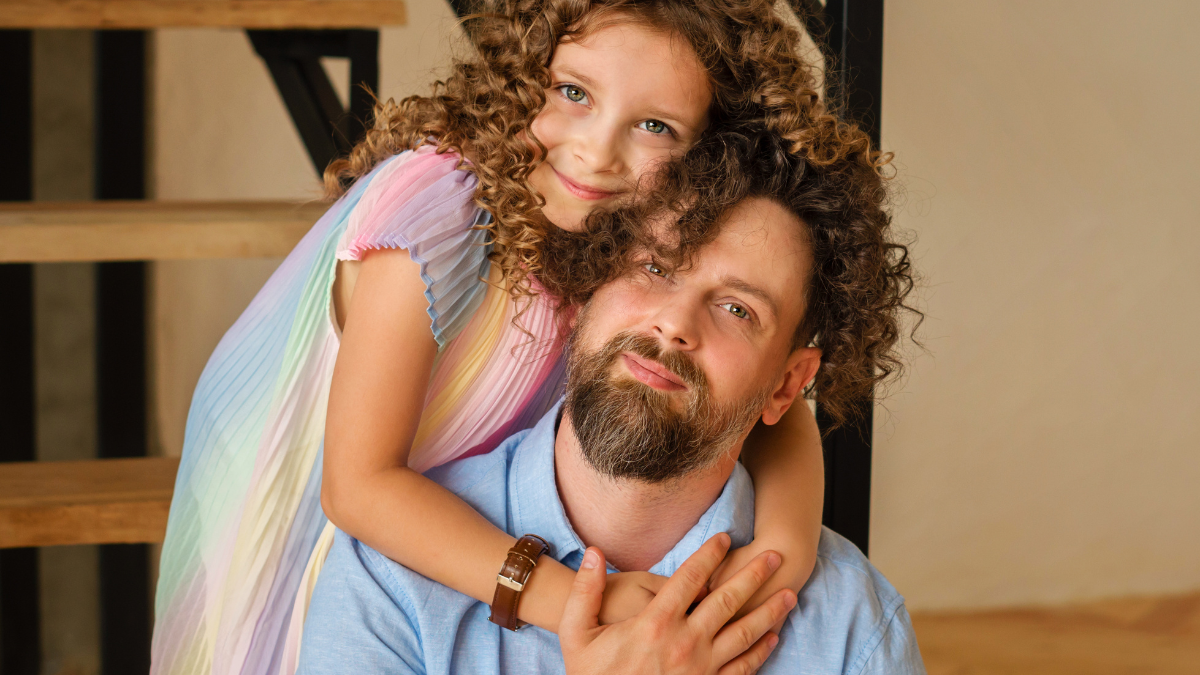
Hugging distance.
Hopefully, this is one of the nicest distances for a child to be in.
A cuddle with Mum or Dad.
A hug from Grandma or Grandad.
Putting your arms around someone you love.
There's absolutely nothing wrong with hugging distance when it's somewhere the child wants to be.
But there's something very important we need children to understand.
They get to choose who they hug.
Because from a self-defence point of view, hugging distance is also an extremely vulnerable position.
Someone this close can hold you, grab you or stop you from moving away.
That's why I believe children should learn from an early age that they have the right to decide who they allow into this space.
If they don't want to hug somebody, they shouldn't feel they have to.
Even if it's someone they know.
Even if an adult tells them, "Go on, give them a hug."
We spend a lot of time teaching children to be polite—and rightly so—but there are times when their personal boundaries are more important than somebody else's feelings.
If something feels uncomfortable, children need to know that they can move away.
They can say "No."
They can say "Please stop."
And if somebody doesn't respect that decision, they can make a noise, get away and tell an adult they trust.
The lesson at hugging distance is simple:
CHOICE — I decide who gets this close to me.
Distance 2: Hand-Shaking Distance — TRUST
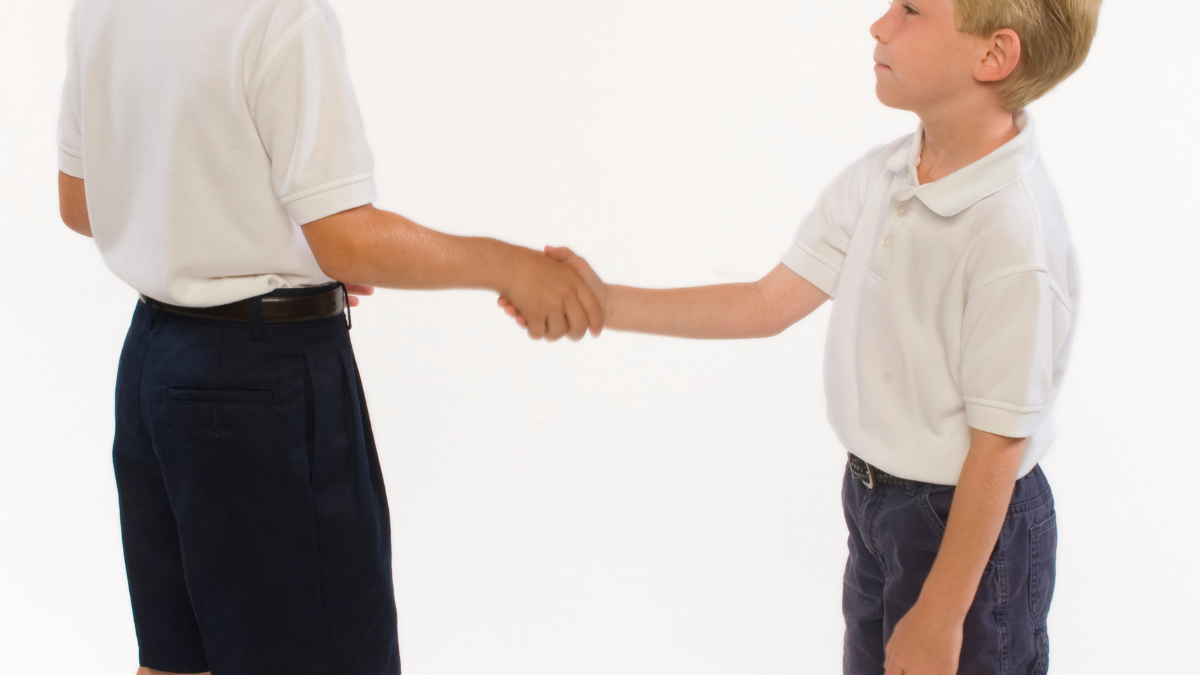
From hugging distance, let's take a small step backwards.
We're at roughly hand-shaking distance.
This is another perfectly normal distance.
We shake hands with people. We pass things to each other. We stand this close to friends, teachers, coaches and people we know.
But there's something I'd like children to understand about this distance.
If you're close enough to shake somebody's hand, they're probably close enough to grab you or hit you.
Your reaction time is very limited.
Again, that doesn't mean children should be frightened when someone comes this close.
It means they need to understand trust.
We allow people we know and trust into this distance.
But if we don't know someone, don't trust them or simply feel uncomfortable around them, there's nothing wrong with taking a step backwards.
In fact, I want children to feel confident enough to do exactly that.
And here's something else worth teaching them.
Watch what happens when you step backwards.
If you create some space and the other person respects it, that's fine.
But if you step backwards and they immediately step forward again, closing the space you've just created, pay attention.
You don't need to wait for someone to actually grab you before deciding you're uncomfortable.
The lesson at hand-shaking distance is:
TRUST — Do I trust this person enough to let them this close?
If the answer is no—or even "I'm not sure"—create more distance.
Distance 3: Talking Distance — AWARENESS
Take another step or two backwards and we're at talking distance.

You can still have a perfectly normal conversation.
You can hear the other person.
They can hear you.
But there's one very important difference.
They can't immediately reach you.
That extra bit of space might not look particularly significant, but from a self-defence point of view it gives you something incredibly valuable.
Time.
If the person moves towards you, you can see them moving.
You have time to move backwards.
You have time to look around.
You have time to say "Stop."
You have time to decide what you're going to do next.
And that's why, if a child is speaking to somebody they don't know or don't completely trust, talking distance is a much better place to be than hand-shaking distance.
We're not teaching children to be frightened of strangers.
Most people they meet will be perfectly nice.
We're simply teaching them that they don't have to let somebody get close to them just because that person wants to.
The lesson at talking distance is:
AWARENESS — I can talk to you without letting you get too close.
Distance 4: 10 Metres — ESCAPE
Now let's put some real distance between the child and the other person.

At least 10 metres and to be honest, the further away the better!
Something very important changes here. 10 metres of distance will give roughly 3 seconds to react to someone who is not to be trusted, it gives the child time, and time gives options.
If somebody is making them uncomfortable, they don't have to wait for that person to get closer.
They can leave.
They can move towards Mum or Dad.
They can go towards a teacher.
They can walk into a shop.
They can move towards a group of people.
They can shout for help.
And if necessary, they can run.
This is something I think we sometimes get wrong when we talk to children about self-defence.
Martial Arts typically concentrate on what they should do when somebody grabs them.
But wouldn't it be much better if children recognised the situation when that person was still 10 metres away?
At 10 metres, you've got choices.
At talking distance, you've got fewer.
At hand-shaking distance, you've got fewer again.
And by the time somebody you don't trust is at hugging distance, many of your best options have disappeared.
That's why the lesson at 10 metres is:
ESCAPE — If something doesn't feel right, I have the space and time to leave.
Distance Gives You Time. Time Gives You Choices.
If there's one idea I'd like parents and children to remember from this article, it's this:
Distance gives you time. And time gives you choices.
The closer someone gets, the less time you have to make a decision.
That's why good self-defence doesn't begin with a punch.
It doesn't even begin with somebody grabbing your wrist.
It begins much earlier.
It begins with noticing who's around you.
Understanding where they are.
Recognising when someone is getting too close.
Trusting that little feeling that says something isn't quite right.
And having the confidence to do something about it.
Four Distances. Four Simple Lessons.
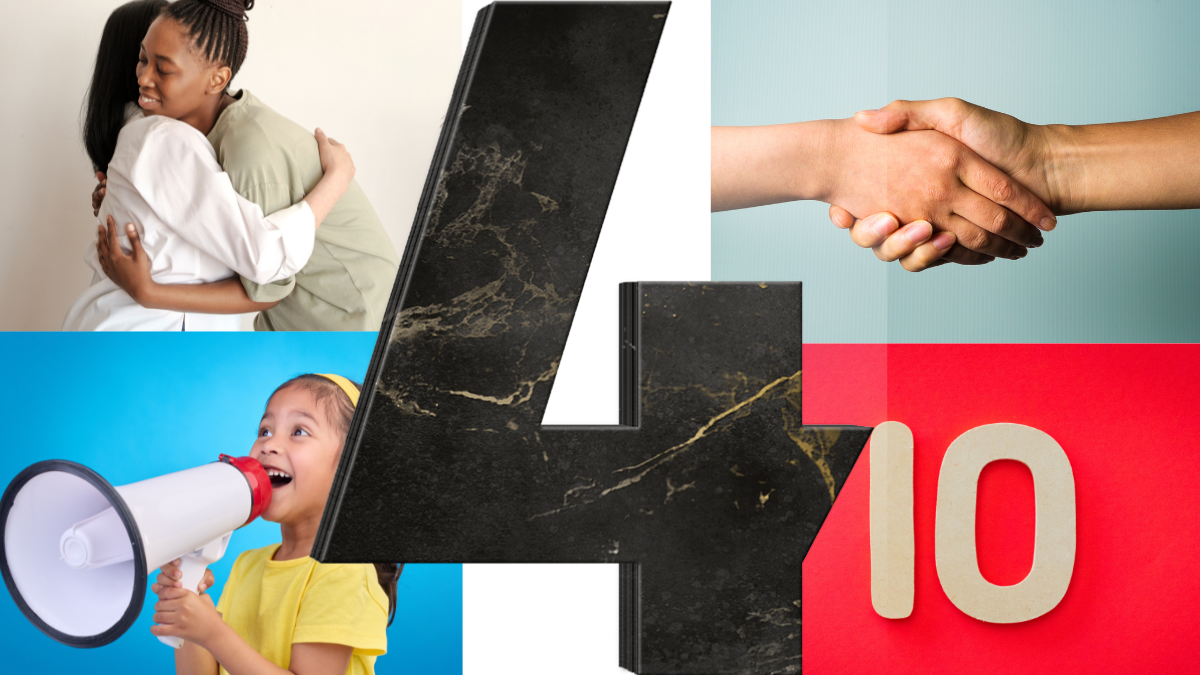
I want children to remember four words:
CHOICE — TRUST — AWARENESS — ESCAPE
Hugging Distance — CHOICE
I choose who I allow this close.
Hand-Shaking Distance — TRUST
I only allow people I trust this close.
Talking Distance — AWARENESS
I can talk to someone while maintaining enough space to react.
10 Metres — ESCAPE
If something doesn't feel right, I have the distance to leave and get help.
These aren't complicated martial arts techniques.
You don't need to be strong.
You don't need to be a black belt.
And hopefully, your child will never find themselves in a situation where these lessons really matter.
But I'd much rather they knew them and never needed them than needed them and had never been taught.
Try the Four Distances With Your Child
This is something you can practise at home in a couple of minutes.
Stand at different distances from your child and ask:
"Which distance am I at?"
Then ask:
"What does that distance mean?"
Hugging distance?
Choice.
Hand-shaking distance?
Trust.
Talking distance?
Awareness.
10 metres?
Escape.
Make it a game rather than something frightening.
Because our objective isn't to make children scared of the world around them.
Quite the opposite.
Knowledge creates confidence.
And a confident, aware child who understands their personal boundaries is hopefully a child who is better equipped to recognise a problem early and make a good decision.
Self-Defence Starts Before the Fight
At Team Black Belt, we obviously teach children punches, kicks, blocks and martial arts techniques.
But to me, children's martial arts has always been about much more than that.
It's about confidence.
It's about awareness.
It's about making good decisions.
And it's about giving children skills that they can take off the mats and use in the real world.
Because the best self-defence technique we can teach a child isn't necessarily how to win a fight.
It's how to recognise a potentially dangerous situation early enough that they never have to have one.
And sometimes, something as simple as understanding four different distances can be a very good place to start.
Sensei Mike
Team Black Belt

Further Reading: Helping Your Child Understand Personal Safety
The Four Distances are designed to give children a simple, memorable way of thinking about personal space, awareness and what they can do when somebody makes them feel uncomfortable.
But there is an important point I want to make to parents.
Keeping a child safe is never the child's responsibility.
We, as adults, have that responsibility.
What we can do, however, is give our children age-appropriate knowledge, encourage them to recognise when something doesn't feel right and, most importantly, make sure they know that they can talk to us—or another safe adult—without fear of getting into trouble.
There are some excellent resources available to help parents continue these conversations at home.
The NSPCC — Talk PANTS
One of the best places I would recommend parents start is the NSPCC's Talk PANTS programme.
The principles fit extremely well alongside our Four Distances.
The NSPCC teaches children that their body belongs to them, that they have the right to say no—even to somebody they know or love—and that they should speak to a safe adult if something makes them worried or uncomfortable.
Importantly, the NSPCC specifically advises that children should not be forced to give kisses, cuddles or hugs, including to relatives and family friends.
That supports the principle behind our first distance:
Hugging Distance = CHOICE.
NSPCC – Talk PANTS: Help Keep Children Safe
The NSPCC also provides advice specifically addressing questions children may ask, including whether they are allowed to refuse a hug or kiss from a family member.
NSPCC – How to Answer Your Child's Questions About Personal Safety
Resources for Different Ages and Needs
One thing I particularly like about the NSPCC approach is that these conversations don't have to be frightening.
Their advice is to use simple, child-friendly language and introduce the subject naturally.
Rather than having one enormous "safety talk", parents can have lots of little conversations as their child grows.
The NSPCC also provides age-appropriate educational materials for children aged 3–11, together with resources for children with autism, children who use Makaton, d/Deaf children and families with additional learning needs.
NSPCC Learning – PANTS Resources for Children, Parents and Teachers
Childline
Older children may sometimes find it difficult to talk to Mum, Dad or another adult they know.
It's therefore worth children knowing that organisations such as Childline exist.
Childline provides confidential support for children and young people, and its resources also reinforce an important message: people have different levels of comfort around physical touch and children shouldn't feel that they have to accept physical contact that makes them uncomfortable.
In the UK, children can also contact Childline free on 0800 1111.
Safeguarding in Schools
Parents who would like to understand more about how safeguarding works within schools in England can also read the Department for Education's current statutory guidance.
The 2026 guidance emphasises a child-centred approach and states that safeguarding is everyone's responsibility.
Department for Education – Keeping Children Safe in Education 2026
One Final Thought From Me
After many years of teaching martial arts, one thing has become very clear to me.
The best self-defence technique is the one you never have to use.
That's why teaching children self-defence should never simply mean teaching them how to punch or kick.
Long before a physical technique becomes necessary, there are opportunities to make better decisions.
Notice.
Think.
Create distance.
Move away.
Get help.
That's what these Four Distances are really about.
Hugging Distance — CHOICE
I decide who I allow this close.
Hand-Shaking Distance — TRUST
I decide whether I know and trust someone enough to allow them within grabbing or striking distance.
Talking Distance — AWARENESS
I can communicate while maintaining enough distance to see what's happening and react.
10 Metres — ESCAPE
If something doesn't feel right, I have distance, time and the opportunity to move towards safety.
And perhaps the most important lesson of all:
Distance gives you time. Time gives you choices.
We don't teach these ideas because we want children to be frightened of the world.
We teach them for exactly the opposite reason.
We want our children to have the confidence to enjoy their growing independence while understanding that they have personal boundaries, that those boundaries deserve to be respected and that they can speak up when something doesn't feel right.
As parents, teachers and martial arts instructors, we can't be standing beside our children every minute of every day.
Would You Like Your Child to Learn Skills Like These?
Knowing how to punch and kick is only a small part of learning martial arts.
At Team Black Belt, we want our students to develop the confidence, awareness and judgement to recognise problems early, make good decisions and, wherever possible, avoid danger altogether.
The Four Essential Distances are just one example of the practical life and personal-safety skills we teach alongside our martial arts programme.
And, of course, children learn best when they're enjoying themselves — which is why our classes are designed to be fun, friendly and something children genuinely look forward to each week.
If you'd like your child to become more confident, more aware and better prepared for the world around them, we'd love to invite them to come and experience Team Black Belt for themselves.
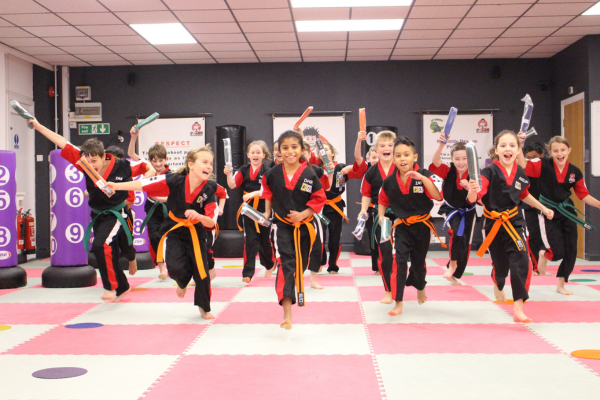
Come and try Team Black Belt
Book your child's FREE introductory lessons and discover how martial arts can help develop skills that reach far beyond the dojo.
But we can gradually give them the knowledge, awareness and confidence to make good decisions when we're not there.
And to me, that's what children's martial arts should really be about.
Not creating children who are looking for a fight.
Creating confident, aware young people who are better equipped to avoid one.
Sensei Mike
Team Black Belt